

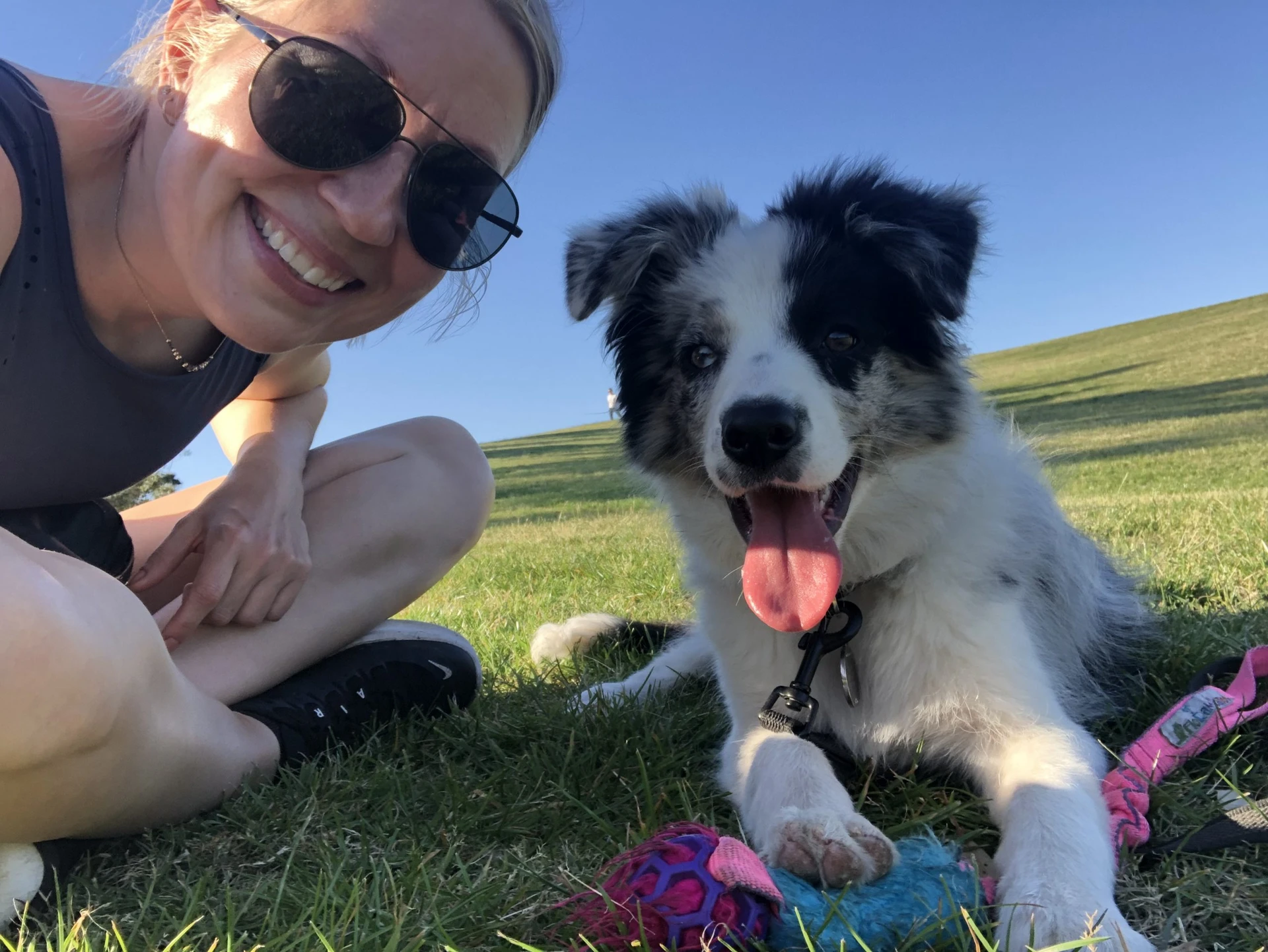
Getting a Puppy for Christmas? A Sydney Trainer’s Checklist
Every December, plenty of Sydney families welcome a new puppy. Done well, it’s a wonderful start to the year. Done in a rush, it can mean a stressed puppy, a chaotic household and problems that show up in January, when everyone goes back to work and school.
I’m Anniina, owner and lead trainer at Eazy Dog Training. I’ve been a professional dog trainer since 2015 and have been helping Sydney dogs and their owners since 2015. These are the things I’d want every family to know before a puppy arrives for Christmas.
Should you get a puppy at Christmas at all?
It can work, but be honest about your plans. Christmas is often loud and busy: visitors, parties, travel and late nights. A new puppy needs calm, routine and plenty of sleep. If your December is packed, consider bringing your puppy home in early January instead, or plan a quieter Christmas at home.
Also think about January. If the house is full over the holidays and then suddenly empty when everyone goes back to work, your puppy will feel that change.
The first weeks matter more than you think
The most important socialisation period for puppies is from 8 to 12 weeks of age, and the whole socialisation window lasts only for the first 16 weeks. What your puppy experiences in that time shapes how they cope with the world for life.
You don’t need to wait until your puppy is fully vaccinated to start. A good puppy school runs in a clean, private venue, and puppies can usually join from 8 weeks, after their first vaccination. Look for a school that focuses on positive reinforcement, controlled interactions, appropriate play, handling, environmental exposure and owner education. You don’t want a chaotic free-for-all.
If your puppy arrives over the holidays, book puppy school for January now, as classes fill quickly. If you’d rather start at home, in-home puppy training is another option.
Puppies in Sydney apartments
City life brings a lot of stimulation into a small space. On a single walk, a Sydney puppy might meet buses, trains, cyclists, scooters, runners, construction noise, crowded footpaths, off-leash dogs and unfamiliar people.
The goal isn’t to expose your puppy to as much as possible. It’s to teach them to calmly navigate their environment, with appropriate distance, good management and plenty of opportunities to sniff and decompress. Short, positive outings beat long, overwhelming ones.
Plan now for January
Separation anxiety is one of the most common problems I see, and the Christmas break can set it up without anyone noticing. If someone is home with the puppy every day for weeks, being left alone in January can come as a shock.
Early signs aren’t just destructive behaviour. Watch for a puppy who follows you constantly, gets distressed when you get ready to leave, paces, pants, whines, barks, scratches at doors, refuses food when alone, or becomes extremely excited when you come home.
Even during the holidays, practise short, calm periods apart, so being alone becomes normal. If you’re worried, get help early. Here’s how we help with separation anxiety.
Keep their brain busy
Puppies need to think, sniff and problem-solve, not just run around. One simple idea you can try tonight: turn your puppy’s dinner into a sniffing game. Instead of putting food in a bowl, scatter some of it around a safe area of the house or yard and let them search for it. For an even easier version, put food inside a cardboard box with some scrunched-up paper. Supervise, and remove anything they try to eat.
Puppies also need to learn to switch off. Constant entertainment can create a dog who expects stimulation all day, so balance play and training with plenty of rest. If you’re looking for safe enrichment toys and puzzle feeders, you’ll find our favourites at Eazy Dog Shop.
Your Christmas puppy checklist
- Choose a quiet time for your puppy to arrive, or plan a calm Christmas at home
- Book puppy school for January, ideally between 8 and 16 weeks of age
- Plan short, positive outings rather than big, busy days out
- Practise short periods apart from the start, not just in January
- Turn some meals into sniffing or puzzle games
- Make sure your puppy gets plenty of sleep, especially with visitors around
- Keep Christmas food and leftovers out of reach, and check with your vet about foods that are unsafe for dogs
- Ask for help early if something worries you
A puppy is a commitment for many years, not just one Christmas. With a little planning, you’ll set them up for a lifetime of good behaviour.
Have a question about your new puppy? Get in touch with Eazy Dog Training.